

by William Wayland
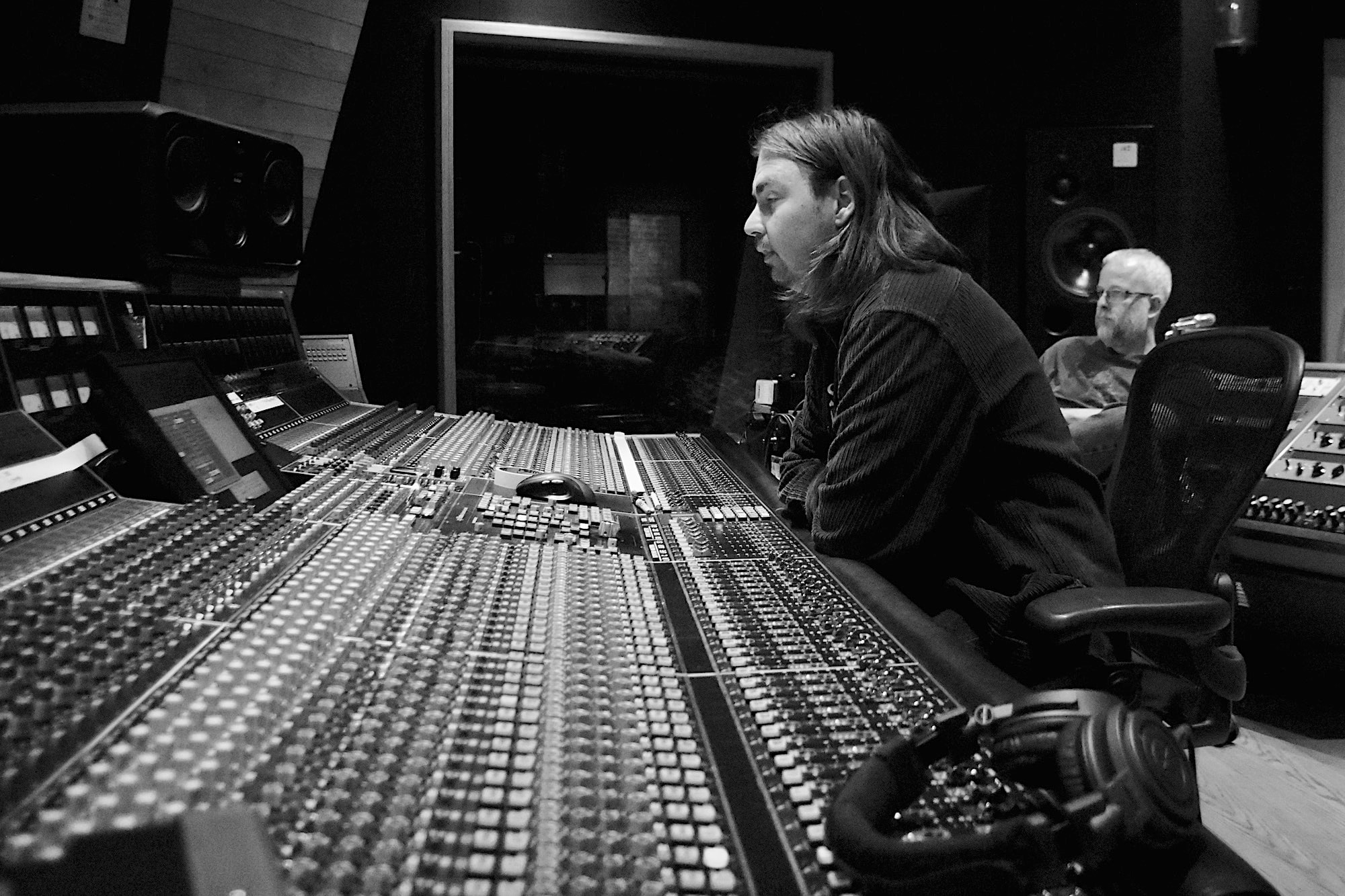
In November 2023, Alvie & The Breakfast Pigs went to 25th Street Recording in Oakland with fifteen songs, a plan to capture the raw energy of their live shows, and the hope of turning five of those songs into a steady stream of new releases. Nearly three years later, that journey is nearing its conclusion with “We Want Change,” the fifth and final single off the Loteria Card Singles Collection releases September 2, 2026.
Along the way, the band faced challenges that a lot of Bay Area bands face: changing schedules, competing priorities, and the realities of making music while holding down elusive day jobs. The songs evolved, too. Some were rewritten, others reshaped, and the band discovered that taking more time could sometimes make the music better. In this two-part Studio to Stage conversation, Alvie Adams looks back at the long road from the recording to the final release and talks about what the experience has taught the band about making music, staying connected to their audience, and keeping rock and roll alive in San Francisco.
Part 1: The Long Road to the Record
June, 2025
William Wayland
Hey, Alvie, thanks for doing this.
Alvie A. Adams
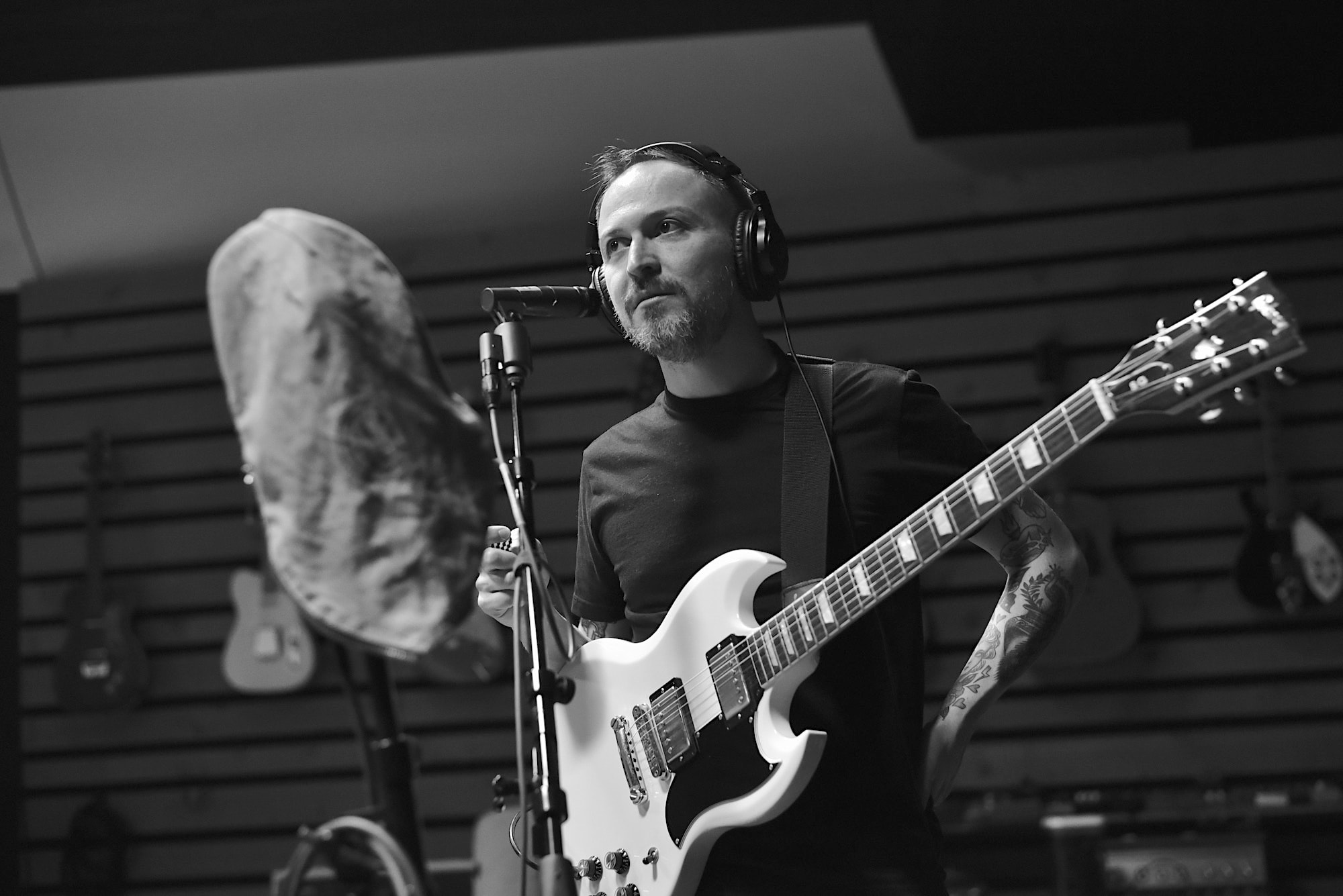
I can’t believe how long it’s been since we started this. I think you shot with us at 25th Street Recording in 2023?
William Wayland
Yes! November 20th, 2023.
And that’s a good place to start. It took a while for this album to come out. I’m interested in the creative process. Can you talk a little bit about what transpired to take us from 2023 to the release of the first single?
Alvie A. Adams
Yeah, definitely. It was a couple of different things. First, we had some stuff that we were working on before the pandemic, and everything just got harder to do during it.
After we released songs in 2020, we had a few left and wanted to level them up. So we were like, all right, let’s try to do a whole album. From 2020 to 2023, we wrote about fifteen songs. We wanted them to make more of an impact than they had before.
We talked to a couple of different producers, but McKay Garner felt like a really good fit for us. He was very focused on drums and on the live sound, which we really think is important. Something that we’ve never been able to fully capture in a recording. So that was kind of our goal. We usually do multi-track recording, and this time we wanted to record live.
After that, we worked with him for quite a while getting the songs ready. We thought we were ready, but we weren’t one hundred percent. We had to practice for another month to feel like we were actually ready to go into the studio.
Capturing the Live Sound

William Wayland
It’s interesting that you wanted to record with McKay Garner because I remember being at 25th Street Recording and noticing there was special attention paid to the drums.
Alvie A. Adams
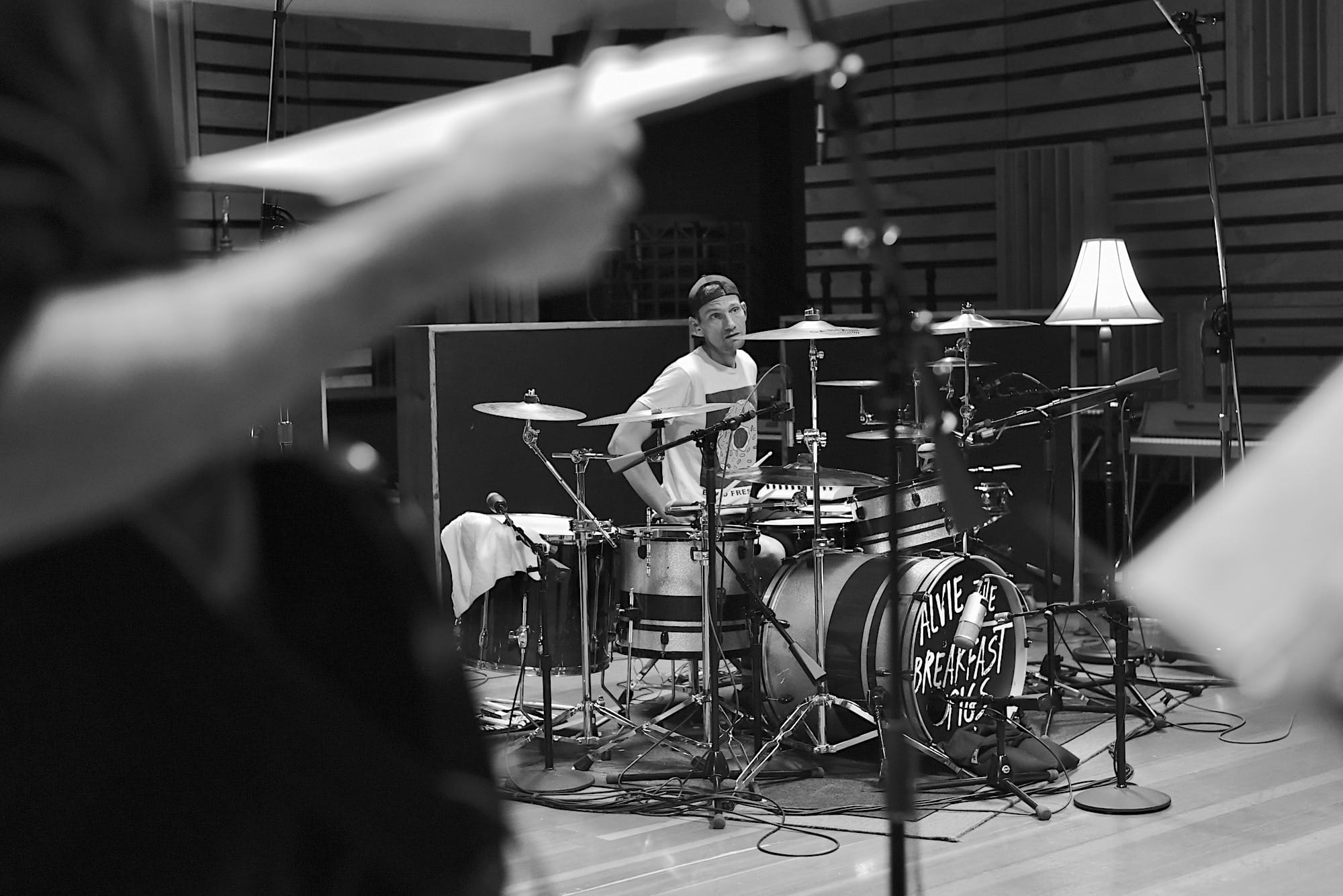
Yeah, we spent the whole first day, six to eight hours, just on drums. Making sure the tones were right, tuning everything up. Drums are really important for our music. For any punk or rock band they matter, but for us, it’s not an afterthought.
We wanted the drums to sound big. That’s why we picked 25th Street. It’s the biggest live room I’ve seen in the Bay Area. And we worked with multiple assistant engineers who put a lot of attention to detail into our music. That helped us play better and come out with better takes.
We ended up only doing five of the fifteen songs we wrote. Part of that was choosing the strongest songs, and part of it was financial. We wanted to work with a producer the whole way through, to really understand that experience, without completely breaking the bank.
But the biggest reason it took so long was that in early 2024, Jake, myself, and Philip all lost our jobs at the same time. That really threw everything off. It took almost a full year to recover and get back to anything close to a normal schedule.
At that point, we were like, you know what, let’s not rush it. Let’s make sure the songs are exactly what we want. So instead of releasing late in the year, we decided to roll everything out in 2025.
We’ve been dropping songs every six weeks. It takes a lot longer than people think. Videos, content, all of it. But with our budget, I think it worked out. We focused on making the songs better instead of just pushing them out.
Studio vs. DIY: Letting Go of Control
William Wayland
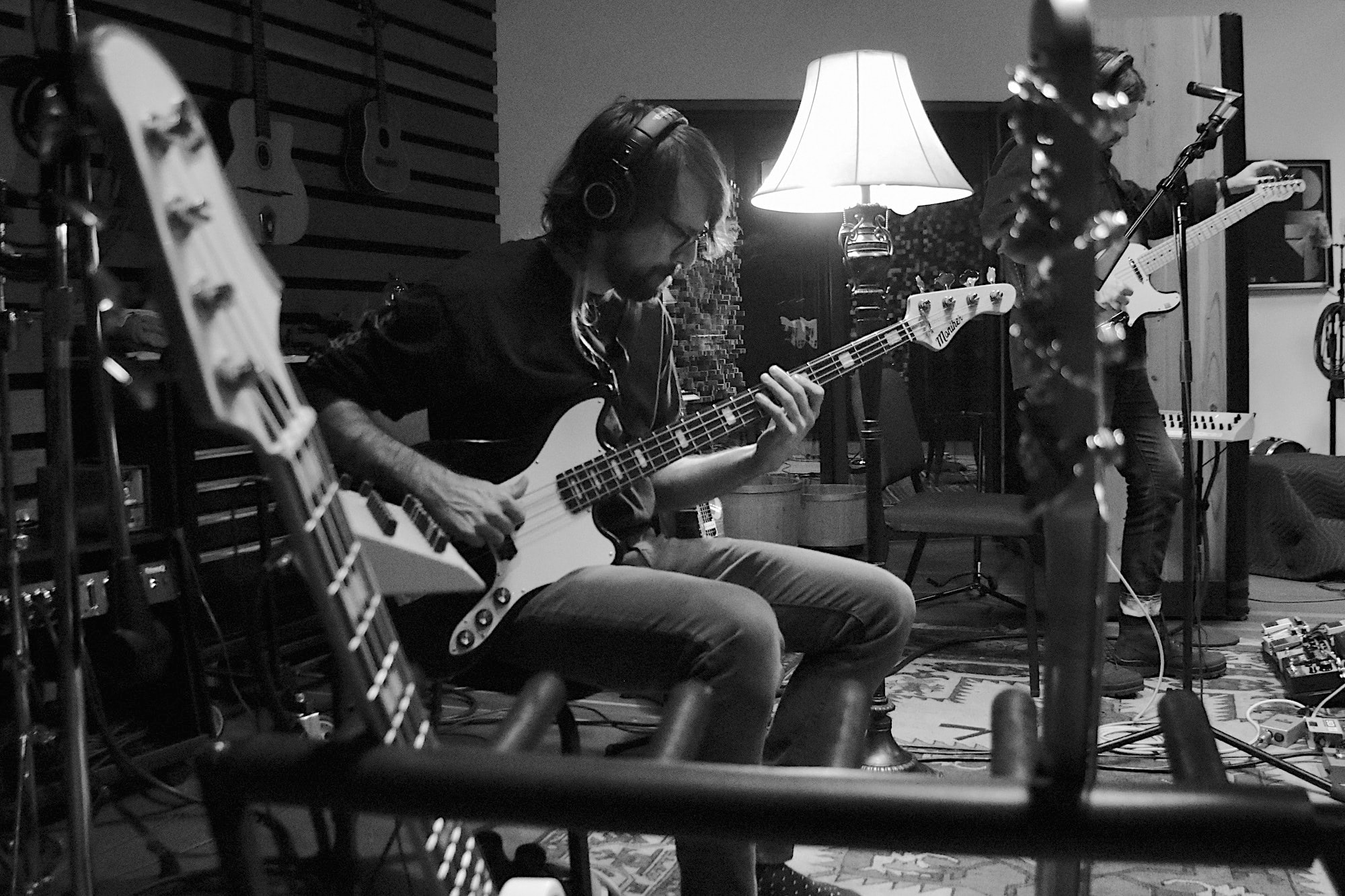
There’s got to be something very different about being in a big room like that versus recording at home. Were your other releases done that way?
Alvie A. Adams
Our third EP, Plastic Surgery, we did at Hyde Street Studios. Everything else, I recorded, produced, mixed, all of it myself.
And honestly, I didn’t want to do that this time. It takes a lot of capacity to be both the creative and the producer. Switching between those roles is exhausting.
I tried outsourcing it once before, and it didn’t go well. We had a clicking issue on a microphone that ruined most of the takes. That’s why working with someone like McKay was huge. I didn’t have to worry about the technical side. I could just focus on playing.
That helped us get closer to what we actually sound like live, and that was the whole point.
When Life Interrupts the Music
William Wayland
How has the reception been so far?
Alvie A. Adams
Really good locally. We’ve been getting radio play, people reaching out. It’s been great.
I was at a Giants game and had people come up and thank me for releasing music again. That felt wild. But it also feels really good to be putting stuff out again.
William Wayland
That’s what’s interesting to me, the dedication. Even after three band members lose their jobs, you still pushed through.
Alvie A. Adams
Yeah, I’m not gonna lie, there were moments where I was like, what am I even doing? This is taking so long.
But at the end of the day, we love doing this. And honestly, everything we went through ended up in the songs. A lot of them are about struggling, about making sure your art is heard.
Some of the songs about civil rights, we wrote those in 2020. We thought maybe the moment had passed, but it hasn’t. If anything, it’s even more relevant now.
So yeah, everything that happened, it made the songs better.
Songwriting: From Chaos to Clarity

William Wayland
Every song feels very anthemic. Is that intentional?
Alvie A. Adams
Sometimes writing comes from inspiration, sometimes from something someone said, sometimes from deep inside, and sometimes it’s all of that.
Politics definitely influenced this record, but I didn’t want to make a ten-song political album. That’s not what the band is about.
But the last five years? Money’s been on my mind constantly. Living in the Bay Area. It’s gotten harder and harder. A lot of these songs are about barely scraping by.
We thought after ten years we’d have things figured out, but San Francisco isn’t a flat city. It’s a very hilly city. You can be at the top and fall to the bottom fast.
One thing that’s changed is the lyrics. These songs are more literal. More direct. This is what I mean. This is what I’m talking about.
But I still want some ambiguity. I want people to hear something and think, is this about what I think it is? And the answer is yes, even if it’s not what I originally meant.
Album Artwork

William Wayland
I love the artwork. Each song has its own image, all tied together. That Lotería card concept is really strong.
Alvie A. Adams
Yeah, that was important to us. Jack Friel. He’s a local musician too, helped bring that to life.
We wanted something cohesive. We’ve always used a lot of yellow, so we leaned into that. Then we found these Lotería cards and loved how each one looks similar but carries a different meaning.
That really matched what we were doing with the songs.
Each Lotería card has a number, and we’re counting down with the releases. It gave us structure, but also something visually fun to build on: shirts, artwork, everything.
Singles vs. Albums

William Wayland
It feels like the way you’re releasing music, singles over time, is the strategy now.
Alvie A. Adams
Yeah. Personally, I love albums. There’s something special about them.
But realistically, this is how you stay visible. If I see fifteen new songs, I’m excited. If I see one single, sometimes I don’t even click, because I want more.
But for us, this keeps us active. We don’t disappear into the ether of Spotify.
Our goal is to keep releasing, two songs, then two more, and just keep going.
The State of San Francisco Rock

William Wayland
You say you’re one of the last remaining rock bands in San Francisco. That’s kinda bold.
Alvie A. Adams
Yeah, it’s not entirely true. There are still great bands. But there are way fewer than there used to be.
When we moved here in 2014, there were tons of rock bands at different levels. Now it’s harder to even find bands that sound like us to play with.
And yeah, Oakland has a scene too, but for us, we want to be a San Francisco rock band.
We want to be the band that touring acts ask to open. And more than anything, we want more rock bands to exist here again.
It’s harder now. It’s easier to make music on a laptop than to get four or five people together consistently. That’s what makes it special.
We’re being a little bold, but we want to be wrong. We want more bands to show up and take that spot.
Part 2: The Long Way Around

When Alvie and I first spoke about the singles releases, Alvie & The Breakfast Pigs were near the beginning or somewhere in the middle of a five-single project that began with a recording session at 25th Street Recording in November of 2023. The plan was to release the songs roughly every six weeks.
It didn’t quite work out that way. Nearly three years after the recording session, “We Want Change,” a song Alvie originally wrote in 2020, will be officially released on September 2, 2026, a few days after he and I had a chance to sit down and talk about the journey. Along the way, the band has had to navigate work, changing schedules, new priorities, and the challenge of keeping a local rock band alive in San Francisco. Alvie and I reconnected to talk about what the band learned and what’s next.
Part 2: The Long Way Around

William Wayland
It’s kind of amazing to me that we’re almost three years away from the recording session at 25th Street Recording. Your final release is a couple of days from now on September 2nd. What’s it feel like to have this project finally coming to an end?
Alvie A. Adams
I love it and hate it at the same time because it’s been such a cool process.
Some of the frustration is that when you write a song, you’re like, “I love this song. I want to get it out there.” Especially in the world of short-form content and people with short attention spans, you want to write something, put it out, move on to the next thing, and continue giving people something to listen to.
But on the other side of it, it’s been such a cool process. This isn’t our full-time job, so being able to have something to focus on and put the effort in to make it what we want has been great.
Taking three years to get these songs to where they are means that, in the past, when I’ve rushed things, there’s always been something where I’m like, “I wish I fixed that.” With these songs, I don’t have that feeling. I feel like they are exactly the best that they could be.
So I definitely appreciate the journey. But then I look at other artists who have a lot more time and a whole team behind them, and I’m like, “It took us three years to get five songs out.”
William Wayland
Right, but you’re also comparing yourself to the Taylor Swifts of the world with a record company and management and a team behind them. I think you’re dealing with the same stuff that a lot of Bay Area bands are dealing with.
The Song Does Not Remain the Same

William Wayland
You wrote “We Want Change” back around 2020, right? And now here we are in 2026. Can you talk about that?
Alvie A. Adams
Yeah. We did. And the song has changed a lot.
We never officially released it, but we were playing it out. We wrote it in 2020, so people had heard it. But now, actually, I had someone come up to me after our last two shows at Gilman and Bottom of the Hill and say, “I’ve heard that song before, but never like this.”
There are new parts to it that have progressed, and the lyrics have changed. I’ve never had a song where I’ve written something and and it’s changed so much over time.
The song was inspired by everything that happened around Black Lives Matter. We were like, “We’re still going to put it out because it means a lot to us and the movement.” But it really kind of reignited when the whole ICE thing happened again, and we added elements of that to the song.
So now it’s not only about one thing. It’s more about social injustice on multiple fronts.
It’s unfortunate that we had to add to it because of how terrible things are. It would be great to say, “We wrote this about these hard times, and the hard times are over.” But obviously, it makes it even more apparent why we need to put our effort into it and release it, and hopefully have some sort of impact on the people who listen to it.
It’s definitely one of the few songs I’ve written that, if I listen to it, it still gives me goosebumps. I feel like we a good job on this one.
We really took the energy and the heartbreak and the anger, and we just made it into a song. I’m proud of it and excited for people to hear it.
Learning to Slow Down

William Wayland
When we talked before, one of the things you wanted to do was keep releasing music consistently rather than spend years making an album. Now you’re at the final single. What’s next?
Alvie A. Adams
That’s definitely one of the challenges.
I don’t know if it’s getting busier or having new priorities, but ever since 2024, our schedules have been such a mess that it’s been harder to get together and do the things we love to do.
We’ve pushed really hard. We’ve been doing practices late at night on weekdays when people have to work early. So we’re still pushing forward.
These five songs have helped us write better and become closer together in terms of how we write. We have some new ones in the works, and we played a couple at our last two shows. We did a new song live, and I’m really stoked on it.
I’d like to get another five in the bank and continue doing this. We probably have about four right now that are done. We just need to find the time to go into the studio.
So the goal is to continue writing more songs and keep things moving.
Finding a Different Pace

William Wayland
It sounds like the next phase might actually be about slowing down a little bit.
Alvie A. Adams
Yeah. I’ve had a lot of time to think about that, and I kind of agree.
I think showing a little vulnerability and real life is important. Like, “Hey, things haven’t gone exactly how we planned. We wanted these songs to come out every six weeks. They haven’t. We’re really excited for you guys to listen, but overall, we want to continue doing things. And if that means slowing down a little bit so we can put forth our best foot forward, I’m all for it.”
I’m excited to kind of go back and take a step back and be at a slower pace and ask: What is the next step? What do we want to write about next? What’s important to us?
I think we’ve grown a lot in the last few years, and that’s definitely something we’re going to do.
I’ve focused a little bit less on posting a video every single week. But the videos I do post are a little bit more thoughtful. They have a little bit more rawness to them. They’re a little less rehearsed.
And we just want to be ourselves, that’s important.
Even if nothing is happening, you can tell people, “Hey, we’re not doing much because we’re taking a break.” I think people appreciate that sometimes.
And the true fans and people who support you—they’ll be back.
One Fan at a Time

William Wayland
There’s probably a feeling that if you don’t keep putting content out there, people will forget about you.
Alvie A. Adams
Right. But they’re busy too. Everybody’s doing stuff.
Every time I’m bummed about something I run into someone on the street or somewhere in the Bay Area, and they go, “Yo, you’re those Breakfast Pigs guys, huh? Love that song,” or “I saw you guys a year ago,” or “I saw you guys six years ago.”
And that’s the kind of thing where I’m like, that resonated with that person. That makes it all worth it to me personally.
I do this to connect with people. People who are fans of art and music and the Bay Area music scene.
We have a great community here. Anytime I can connect with anyone, whether I know them or not, I love that.
Still Here

Nearly three years after the band got together at 25th Street Recording to capture these songs, “We Want Change” brings the five-single project to an end. It took longer than Alvie & The Breakfast Pigs thought it would when they started but they pushed through.
The songs evolved. Life happened. And through it all, the Breakfast Pigs kept finding reasons to play.
For Alvie, that connection to the music, and to the people who listen, and to the Bay Area community that supports the band is ultimately what makes the work worthwhile.
Alvie A. Adams
I love having connections all over the Bay and having good people who do good work and support good music.
Photo Gallery
25th Street Recording
November 2023


Bottom of the Hill
June 2025


Sweetwater Music Hall
September 2025


Want to Be Featured in Studio to Stage?
Studio to Stage is a series about musicians, the creative process, and recording music in the Bay Area.
The series follows musicians across all genres and every budget from artists recording in their bedroom or garage to bands working in some of the Bay Area’s amazing recording studios.
If you’re a Bay Area musician and want to be featured in Studio to Stage, reach out to William Wayland.


